Italy Honeymoon Packages

Tips and advise for day trips from Sorrento by Road to Travel Inc.

Thursday, February 18, 2016

The best local dishes to try in Sorrento

It is not only the stunning views over the Bay of Naples, Mount Vesuvius and the Amalfi Drive that you will remember after visiting Sorrento. One of the things that you will find even harder to forget is the local cuisine. The food alone is a good reason to visit this corner of Italy. Simple tasty dishes of Sorrento are based on the ingredients that the fertile land of the Amalfi coast and the sea provide: olive oil, citrus fruits, tomatoes, wine and fresh seafood. Try some of these traditional dishes in good local restaurants and trattorie prepared by chefs who often use recipes passed from generation to generation.   

Sorrento
Spaghetti con le noci

Spaghetti pasta is tossed in a sauté mix of olive oil, garlic, walnuts and anchovies. Sorrento is famous for its walnuts (noci di Sorrento) that have been cultivated here since ancient times. This dish tastes the best when made with Sorrento walnuts.

Seppie ripiene alla sorrentina

Stuffed calamari is one of many local seafood based recipes that has been perfected through generations. The calamari are stuffed with a mix of eggs, parmigiano cheese, mozzarella and raisins and cooked over a low flame with tomatoes. Delicious!

Gnocchi alla sorrentina

This simple pasta dish is one of the most famous in Italy. The soft gnocchi are dressed with generous amounts of local oil and served with tomato sauce, pieces of local fiordilatte mozzarella, parmigiano and fresh basil.

Gnocchi alla sorrentina
Saltimbocca alla sorrentina

Meat lovers will appreciate this exquisite veal-based dish. Thin meat slices are oven cooked with prosciutto ham, tomato sauce and mozzarella. You can find saltimbocca in many eateries served as a main course or as fast food in a panino.

Babà al limoncello

In Sorrento the famous Neapoletan cakes babà is given a local twist. Instead of rum, these mouthwatering spongy cakes are soaked in limoncello, a liqueur made with locally-grown fragrant lemons. 


Photos by: Harvey Barrison/Flickr, Gnocchi alla sorrentina/Facebook

Thursday, January 21, 2016

Visiting the ancient city of Herculaneum

You can be forgiven for thinking that there is nothing better than soaking up “la dolce vita” in Sorrento. However, in case you decide to squeeze in some cultural activities, there is plenty to do. How about heading to the ancient Roman city of Herculaneum, for example?

Herculaneum
Overshadowed by its bigger and more famous neighbour Pompeii, Herculaneum is better in many aspects. There are no overpriced tacky souvenir kiosks at the entrance, no lines to the ticket office and it can be explored in 2-3 hours.

In AD 79, a volcanic eruption of Vesuvius destroyed several cities around it including Herculaneum and Pompeii. Being only 4 miles from the volcano, Herculaneum was covered with a cloud of poisonous gas and buried under almost 60 feet of boiling lava. The volcanic materials solidified with time preserving the city almost intact. Although the story and fate of Herculaneum was always known to historians, it was only rediscovered in 1709 when a local farmer, while digging a well, found pieces of coloured glass where, as it turned out later, the Roman theatre once stood. A significant part of the ancient city remains underground, however, the parts that are visible are fascinating.

Frescoes in Herculaneum
Compared to Pompeii, Herculaneum has more remarkably well preserved features such as including wooden beams, furniture and upper floors in the houses. When the city’s most luxurious building, the Villa of the Papyri, was excavated, the archaeologist found numerous papyrus scrolls still stacked on the shelves of its library. Today, they are stored in the National Library in Naples and some of them have been scanned with infrared rays and studied.

Wall decor in Herculaneum
Many houses in Herculaneum have spectacular wall and floor mosaics. House 22 has a beautiful formal dining room, triclinium, and a nymphaeum grotto decorated with colourful mosaics. The thermae bath house offers another interesting glimpse in the ancient Roman city’s past where you can see a few surviving precious works of art and even original charred wooden steps.


Photos via Flickr by: Andrew Fogg, Andy Hay, Chris Ruggles.

Sunday, November 15, 2015

The castles of Naples

Naples, one of the oldest cities in the world, has several magnificent castles. Intertwined with legends, their history offers a fascinating glance into the city’s past.

Castel dell'Ovo
Castel dell'Ovo 

Considered the oldest castles in Naples, Castel dell'Ovo replaced a Roman-era fortification in the 12th century. The formidable fort sits on the islet of Megaride, where according to a legend lived a siren named Parthenope. There is also another myth connected to the castle: the Roman poet Virgil wrote that he had placed a jar with a magic egg beneath the fortress. As long as the egg was intact, Naples would live. The citadel was used as a prison for many centuries and today visitors can see the hall of dungeons, cannon terraces and admire stunning views over the coast and the city.

Castel Nuovo
Castel Nuovo 

The Maschio Angioino as locals call it is another symbol of Naples. King of Naples Charles I of Anjou ordered to build the castle in 1279 when the kingdom's capital was transferred from Palermo to Naples. The royal residence was enlarged and fortified over time and saw many sieges and historic events. Masters such as Giotto, Petrarca and Boccacio visited the splendid castle in its glory days. Today Castel Nuovo is home to Naples' Civic Museum.

View from Castel Sant'Elmo
Castel Sant'Elmo

This 13th century fortress is overlooks Naples from the hill of Vomero. For a long time heretics and revolutionaries were locked up behind its impenetrable walls and in the 20th century it served as a military prison. After a long and thorough restoration the fortress has become home to a number governmental offices with some spaces used for contemporary art exhibitions. Although, most of the castle is closed to the public you can walk around parapets and admire the sweeping views of the city and Vesuvius


Photos via Flickr by: Maritè Toledo, Robert Emperley, Roberto Taddeo.

Saturday, September 19, 2015

What to see in Ravello

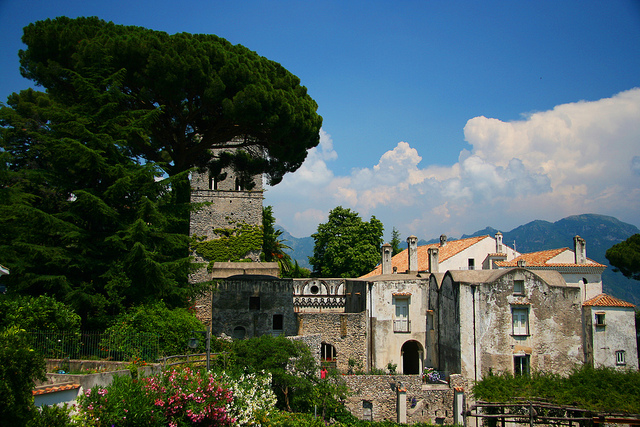
Set high up on a hill above the sea the charming resort of Ravello offers dizzyingly beautiful vistas over the Amalfi Coast and the Mediterranean. Its refined glamour, secluded villas, lush gardens and incredible views have attracted the aristocratic Grand Tourists of Europe a while ago , who were followed by many writers, artists and musicians. Greta Garbo, Jacqueline Kennedy, Elizabeth Taylor, Humphrey Bogart and Tennessee Williams have holidayed here. 

Ravello

Although, during high season the town is overrun by tour groups, you can always find a hidden quiet corner along windy cobbled streets. 

Two magnificent garden estates, Villa Rufolo and Villa Cimbrone, are the star attractions in Ravello. Villa Rufolo, renowned for its luxuriant cascading gardens, provided inspiration for Richard Wagner’s opera Parsifal. The estate is a delicious melange of Arabic, Sicilian and Normal architecture surrounded by colourful blooms and set against the glistening blue of the sea. Villa Rufolo fills up with sounds of music as it hosts the Wagner Festival and The Ravello Concert Society's season of chamber music concerts every year. 

View from Villa Rufolo

Villa Cimbrone is another must-see in Ravello. In the 1920 the Bloomsbury set loved staying here, so did Greta Garbo, Salvador Dali and Winston Churchill later. Spend some time admiring the fragrant gardens, fountains and the magnificent sea views from the Infinity Terrace.

Villa Cimbrione
Do not miss Ravello’s cathedral built in the 11th century and filled up with marble sculptures, mosaics and medieval frescoes. There are several beautiful churches in town; all of them are worth a visit.

Enjoy the town’s relaxing atmosphere strolling along the tiny streets, shopping for local colourful ceramics, sipping a coffee, sampling excellent limoncello or tasting olive oil in one of many delicatessens. 

For those feeling fit and adventurous there is a beautiful hike along the Path of the Gods with some of the most unforgettable views on the Amalfi Coast.


Photos via Flickr by: Ben Jeffrey, Andrew Batram, Jean-Pierre Dalbéra.

Friday, July 17, 2015

Discover Naples

The bustling city of Naples is only an hour drive from Sorrento and even a brief visit will give you a taste of the city’s fascinating culture, ancient traditions and its delicious cuisine.

Italy’s third largest city, Naples can feel anarchic and untidy but do not let ramshackle buildings covered with graffiti and chaotic streets turn you off. You just need to know where to look for the treasures and there are plenty of them in Naples. Start from Posillipo Hill, city’s most beautiful quarter with some of the most exclusive private villas. Ancient Greeks and Romans knew this hill as a "respite from worry" and, over centuries, many celebrated artists came here to paint majestic panoramic views over the city, the bay with the islands of Capri, Ischia, and Procida on the horizon.


Naples boasts three impressive castles, which are all worth a look: Castel dell'Ovo, the oldest castle in the city, 13th century Castel Sant’Elmo and Castel Nuovo that houses the Civic Museum.
At the impressive Piazza Del Plebiscito you will see the grand Palazzo Reale that was once the residence of the Bourbon Kings. Today, the restored royal apartments in the palace house an excellent collection of paintings, tapestries, and furniture from the 17th to the 19th centuries. The nearby San Carlo Opera House, one of the oldest opera houses in Europe, is famous for its exceptional acoustics, opulent décor and outstanding performances.


Basilica of San Francesco Di Paola, a rare example of the Neo-Classical style in Naples, is often compared to the Rome’s Pantheon for its grandiose 53 metres high dome.
Another must see site in the city is the catacombs of Santa Maria della Sanità. Excavated during Roman times for water storage these underground labyrinthine were used for burials from the fifth century. The dimly lit atmospheric corridors are filled with skulls, patches of ancient mosaics, and frescoes.


For authentic gifts pop over to via San Gregorio Armeno in the old part of Naples where generations of local craftsmen have been making figurines for nativity scenes.
Do not forget about the city’s main attraction – pizza! Try the authentic local types: marinara, margherita and napoletana margherita DOC with buffalo mozzarella.
Photos via Flickr by: Alexandra Svatikova, Gabriele Ravanetti, Maritè Toledo.